Drainage field vs soakaway
People use the words to mean the same thing. For sewage, they are not, and the difference can decide whether your system meets the rules.
Soakaway
A soakaway is usually a pit filled with rubble or crates, or a chamber of concrete rings, that lets water soak into the ground at one point. It is designed for rainwater. For sewage, the general binding rules say a soakaway installed after December 2007 is not allowed, and shafts or concrete rings should be avoided for new discharges.
Drainage field
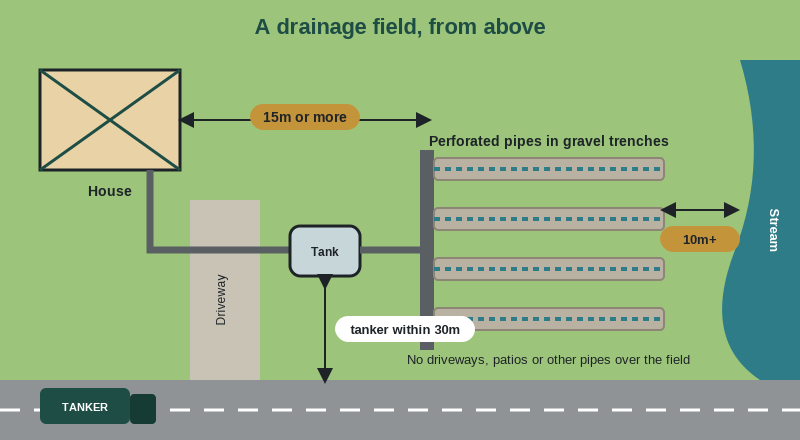
A drainage field is a network of perforated pipes laid in gravel trenches, spreading the effluent thinly over a wide area so the soil can clean it. For sewage, this is what the rules require, built to BS 6297:2007 and designed from a percolation test.
What if I have an old soakaway?
Older systems installed before the standards came in may still be acceptable if they work and cause no pollution. If yours is failing, being replaced, or might be discharging straight into groundwater, it needs a proper drainage field. See drainage field installation.
Checked against GOV.UK guidance: 24 November 2026. Rules apply to England.
Get a fixed, written quote
Free site visit across Yeovil and an hour around. We tell you straight what you need, what it costs and how long it takes.